In the rapidly evolving landscape of the railway industry, the demand for efficiency, precision, and durability is ever-increasing. As a leading global manufacturer of cutting tools, ISCAR is at the forefront of providing advanced solutions tailored to meet these needs. The innovative approach and the commitment to excellence have positioned the company as a trusted partner in the railway sector, offering a wide range of products designed to enhance productivity and reduce operational costs.
ISCAR's cutting tools are renowned for their precision and performance, which are critical in the railway industry, where components must meet stringent safety and quality standards. The company's comprehensive product line includes turning, milling, drilling, and threading tools, all of which are engineered to deliver exceptional accuracy and surface finish. These tools are crafted using advanced materials and coatings that extend tool life and maintain consistent performance, even under the most demanding conditions.
Understanding the unique challenges faced by the railway industry, ISCAR provides customized solutions that cater to specific requirements. The company's team of experts works closely with clients to develop tailored strategies that optimize machining processes and enhance productivity. Whether it's manufacturing wheels, axles, or other critical components, ISCAR's tools are designed to handle complex geometries and tough materials, ensuring efficient and reliable operations.
The railway industry often involves machining materials such as high-strength steel and composites, which can be challenging for conventional tools. ISCAR addresses this by utilizing advanced cutting materials and coatings that enhance tool hardness, wear resistance, and thermal stability. ISCAR's advanced use of innovative carbide grades and multi-layered coatings ensures that tools maintain sharpness and performance over extended periods, reducing downtime and maintenance costs.
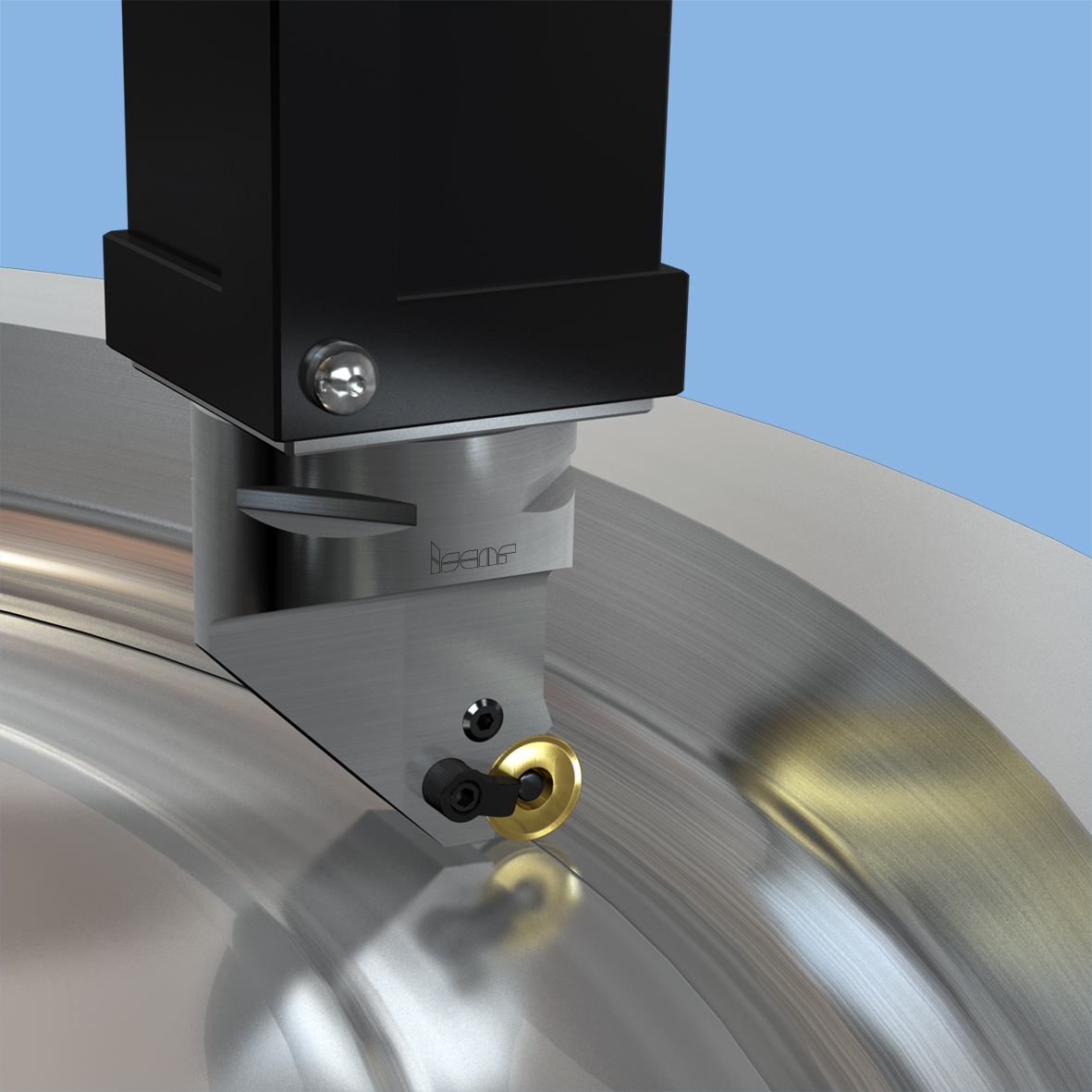
Rail wheels vary in form and dimension. Most wheel types are made from rolled steel, while others are produced from cast steel. The diameter of these wheels ranges from 400 mm to 1200 mm. Regarding the turning process in machining rail wheels, there are two distinct production stages: turning operations for manufacturing new wheels and re-turning worn wheelsets. When profiling new wheels on vertical lathes, turning tools with round inserts are essential (Fig. 1). ISCAR's products for profiling applications include various tool designs that accommodate inserts of different sizes. These tools differ in their insert clamping mechanisms, utilizing either a central screw or a lever. The round inserts, designated as RCMT and RCMX, come in various diameters and rake face geometries.
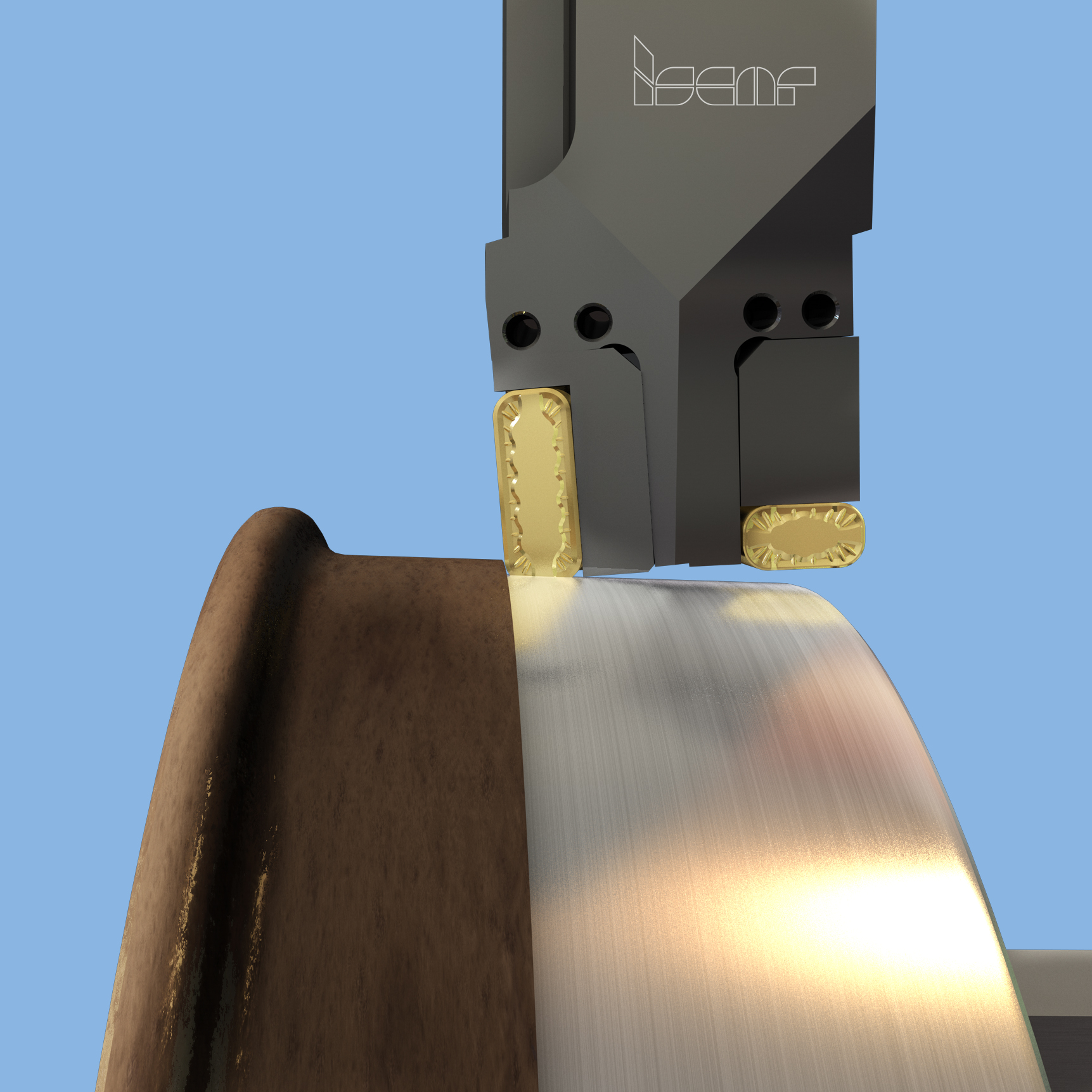
When re-turning worn rail wheels, portal CAM or CNC counter-wheel machines are used. These machines can simultaneously cut both left and right wheels while ensuring high profile accuracy and maintaining the wheels' dimensions and profiles. For re-turning operations, ISCAR offers standard tools with interchangeable cartridges that accommodate tangentially clamped indexable inserts, typically of the LNMX type, in sizes of 19 and 30 mm (Fig. 2). The inserts come in a wide range of geometries and carbide grades to suit the diverse forms and dimensions of wheelsets.
In re-profiling locomotive wheels on underfloor counter-wheel machines, ISCAR's program includes specially designed milling cutters equipped with interchangeable cartridges that hold round RPMW 16 inserts.
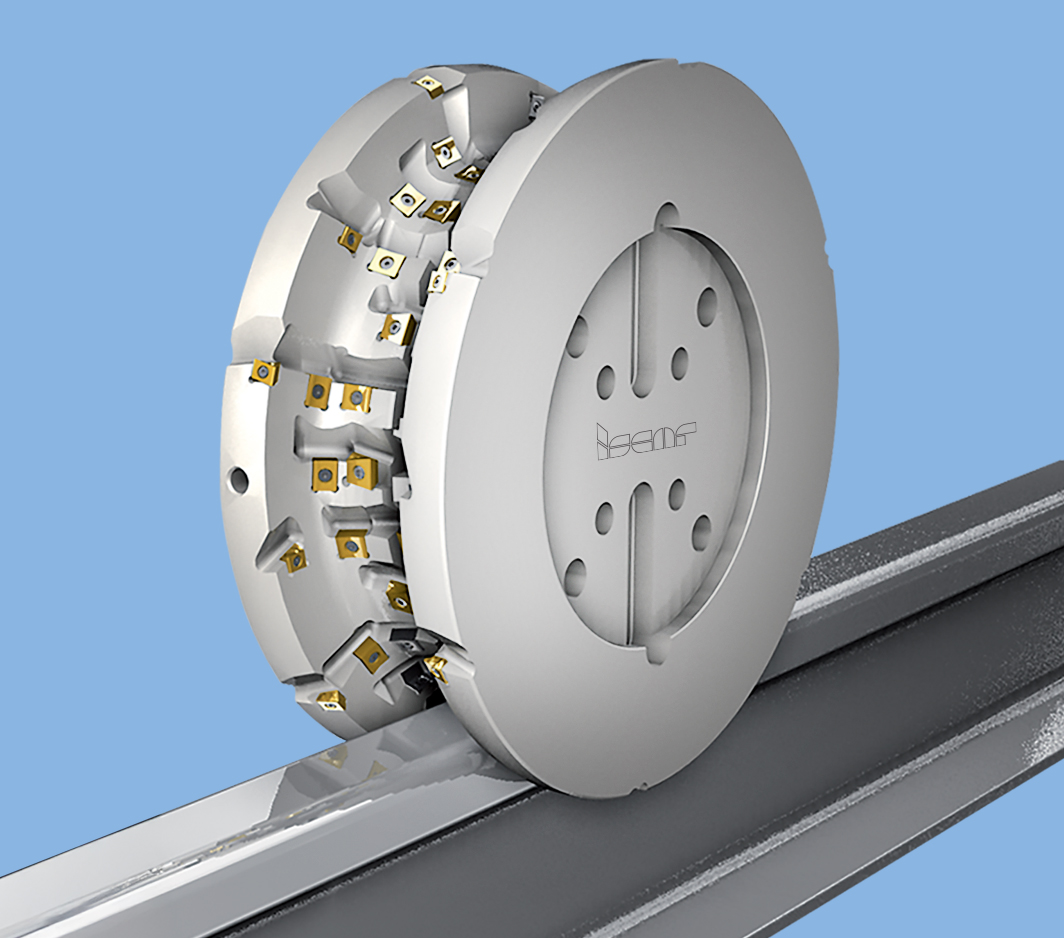
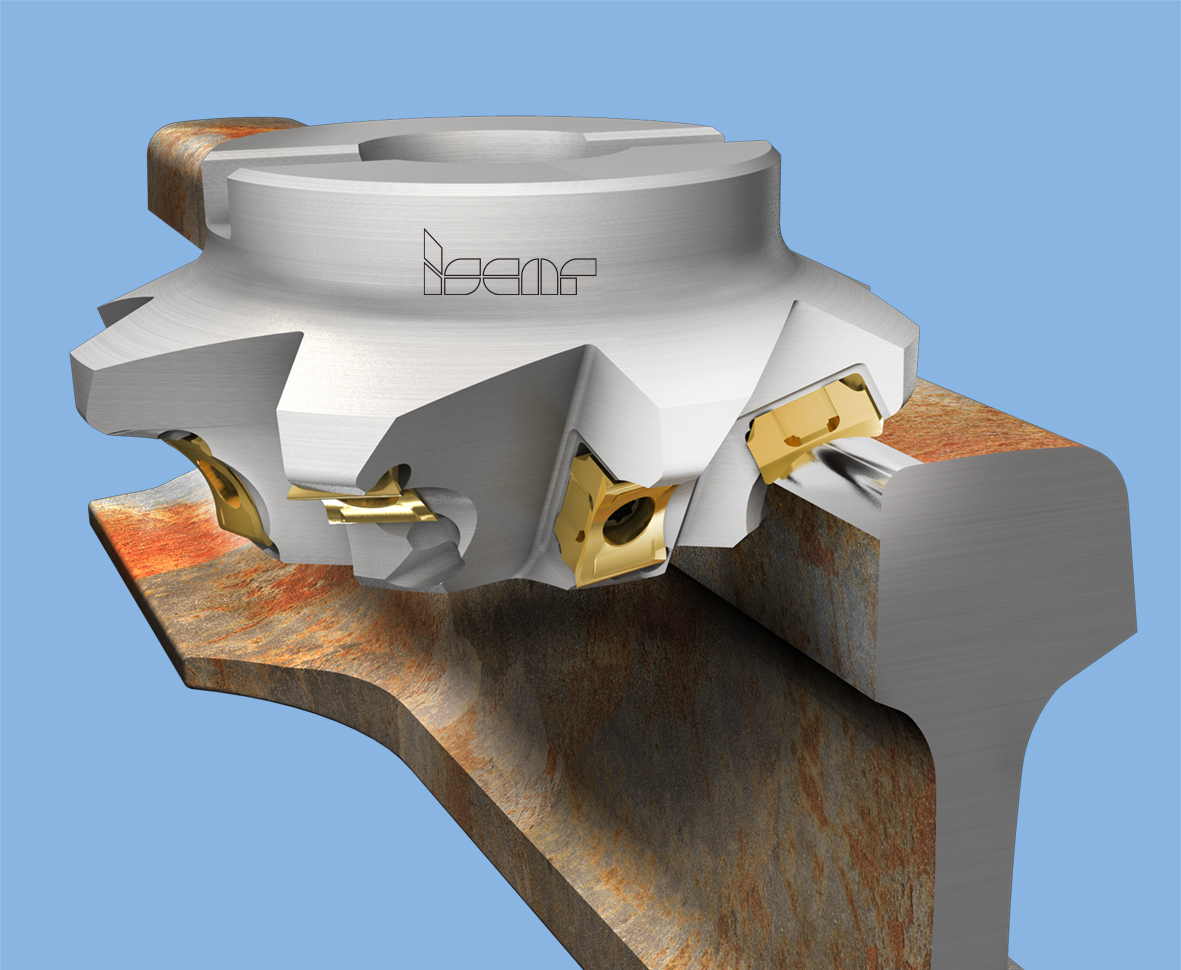
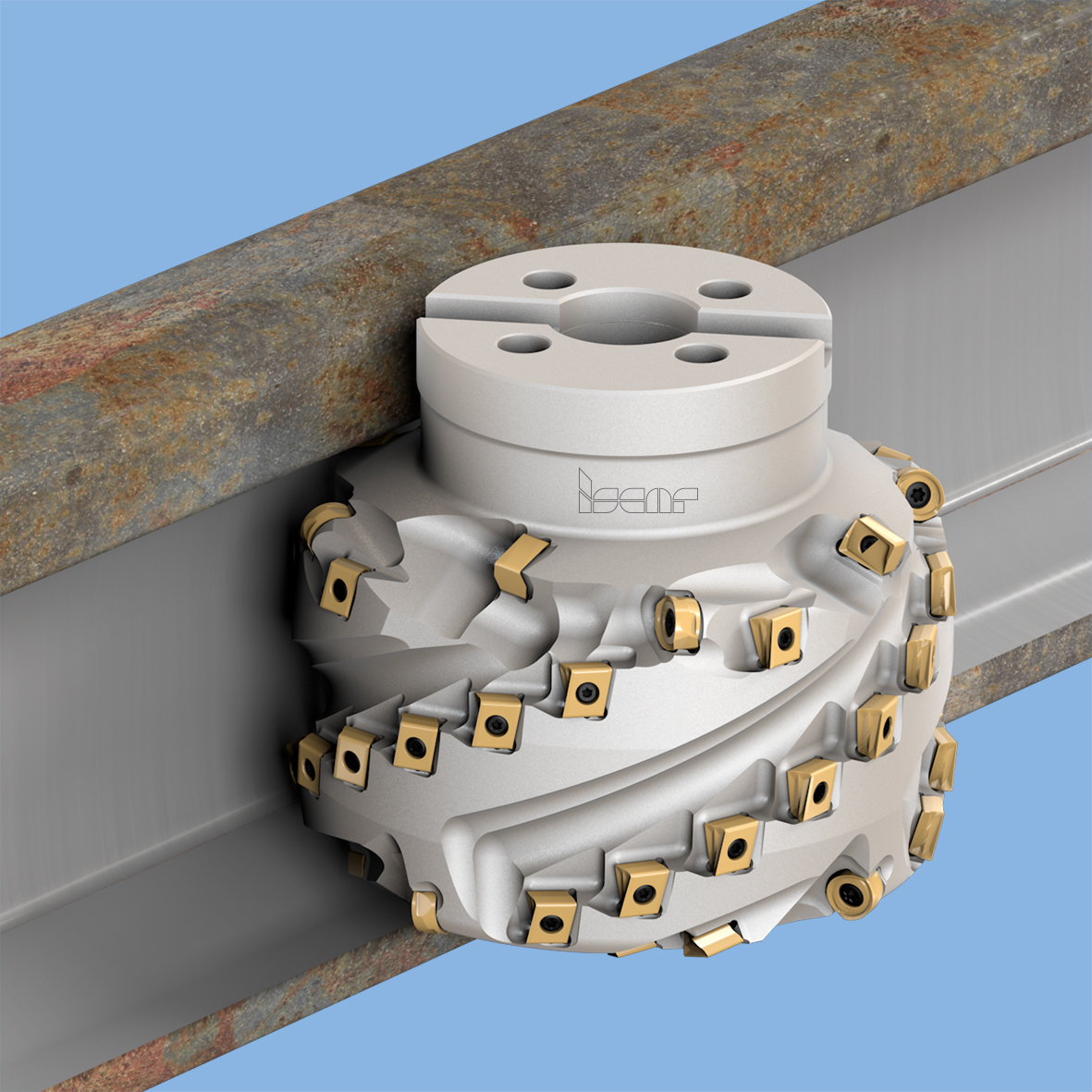
When machining switchers, track profiles, separators, and connecting links, ISCAR offers a comprehensive portfolio of extended flute milling cutters that feature tangentially clamped inserts, which are based on effective TANGMILL and HELITANG products. For applications involving tapered top profiles, these cutters include conical-shaped tools with customizable approach angles, depending on customer requirements and rail profile. For milling square shoulders and side profiles, the portfolio includes cylindrical-shaped shell mill cutters with diameters of up to 250 mm. The tangential clamping design concept focuses on providing an extremely rigid tool structure and enhancing the dynamic performance of the tool when machining under challenging conditions and significant load. This concept enables the introduction of robust, specially designed concave-shaped cutters for milling the radiused top profiles of switchers and separators (Fig. 3,4). Additionally, the concept has proven effective in various particularly those made from manganese-alloyed steel. The proposed cutter principle significantly reduces cutting forces and improves tool consistency when machining difficult-to-clamp rail shapes.
T490 extended flute cutters with rigidly tangentially clamped inserts with four indexable cutting edges provide effective solutions for machining sidetrack profiles.
The connecting link blades are the running rails placed alongside the switch rails when in the closed position. They are designed with different profiles and moles to fit rail configurations. The connection link is usually manufactured from manganese steel, and the production operations include various types of profile machining, which are performed by specially tailored indexable milling cutters (Fig. 5).
In rough milling, special TANGMILL cutters with face-mounted indexable inserts are great for machining crossings and transition rails made of manganese alloy steel. The cutter’s positive rake cutting action dramatically reduces forces and improves tool consistency in difficult-to-clamp rail shapes while providing a smooth cut and eliminating hard finishing applications.
The locomotive power train is a complex and intriguing system at the core of railway transportation. It transforms fuel energy into mechanical energy to propel trains along tracks. The process starts with the engine, which may be powered by diesel, electricity, or historically, steam. The power train engine also includes the transmission, which manages power distribution, along with various control systems to ensure smooth and responsive operation. Innovations in locomotive power trains are continually evolving, emphasizing sustainability through hybrid systems and alternative fuels, in line with global efforts to lower carbon emissions. ISCAR's new advanced tools are utilized for machining locomotive engines and transmission components, enabling both rough and finish milling, as well as drilling and thread milling.
Sustainability is a key focus for ISCAR, and its solutions for the railway industry reflect this commitment. By optimizing tool design and cutting parameters, ISCAR helps clients minimize material waste and energy consumption. ISCAR's high-performance tools reduce machining time and improve efficiency, leading to significant cost savings. This sustainable approach not only benefits the environment but also provides economic advantages to ISCAR's partners.
ISCAR's dedication to customer success extends beyond providing high-quality tools. ISCAR offers comprehensive support and training to ensure clients can fully leverage their products' capabilities. From on-site consultations to technical workshops, ISCAR equips railway industry professionals with the knowledge and skills needed to maximize tool performance and achieve operational excellence.
ISCAR's innovative solutions for the railway industry exemplify their commitment to advancing technology and improving manufacturing processes. By delivering precision, performance, and sustainability, ISCAR continues to play a pivotal role in shaping the future of railway manufacturing. As the industry progresses towards greater efficiency and reliability, ISCAR remains a trusted partner, empowering clients with the tools and expertise needed to navigate the challenges of tomorrow.