


Page 28 - Demo
P. 28
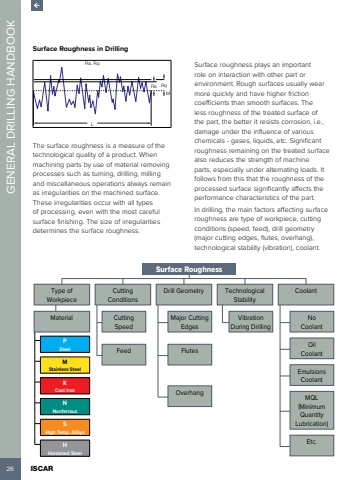
26 ISCAR GENERAL DRILLING HANDBOOKSurface Roughness in DrillingLRa RqMRa, RqThe surface roughness is a measure of the technological quality of a product. When machining parts by use of material removing processes such as turning, drilling, milling and miscellaneous operations always remain as irregularities on the machined surface. These irregularities occur with all types of processing, even with the most careful surface finishing. The size of irregularities determines the surface roughness. Surface roughness plays an important role on interaction with other part or environment. Rough surfaces usually wear more quickly and have higher friction coefficients than smooth surfaces. The less roughness of the treated surface of the part, the better it resists corrosion, i.e., damage under the influence of various chemicals - gases, liquids, etc. Significant roughness remaining on the treated surface also reduces the strength of machine parts, especially under alternating loads. It follows from this that the roughness of the processed surface significantly affects the performance characteristics of the part.In drilling, the main factors affecting surface roughness are type of workpiece, cutting conditions (speed, feed), drill geometry (major cutting edges, flutes, overhang), technological stability (vibration), coolant.PSteelMStainless SteelKCast IronNNonferrousSHigh Temp. AlloysHHardened SteelSurface Roughness Type of WorkpieceMaterial CuttingSpeedMajor CuttingEdgesVibrationDuring DrillingNo CoolantOil Coolant Feed FlutesEmulsionsCoolantMQL(MinimumQuantityLubrication)Etc.OverhangCutting ConditionsDrill Geometry Technological CoolantStability


